how-to-build-a-flutter-app-on-xcode-cloud
Learn how to set up Xcode Cloud to build and deploy your Flutter application to TestFlight and the App Store with this step-by-step guide.
What this skill does
# How to build a Flutter app on Xcode Cloud In this article we are going to go over how to setup [Xcode Cloud](https://developer.apple.com/xcode-cloud/) to build your [Flutter](https://flutter.dev/) application for [TestFlight](https://developer.apple.com/testflight/) and the [AppStore](https://developer.apple.com/app-store/). ## Step 1 Before we begin Flutter needs to be installed, and you can check by running the following: ``` flutter doctor -v ``` After it is installed we can run the following command to create and open our Flutter project (skip down to step 2 if adding to an existing app). ``` mkdir flutter_ci_example cd flutter_ci_example flutter create . ``` If you need more help with creating the first project you can check out my previous blog post [here](https://rodydavis.com/posts/first-flutter-project/). After the project is created open it in your favorite code editor. ``` code . ``` ## Step 2 The generated files should look like the following: 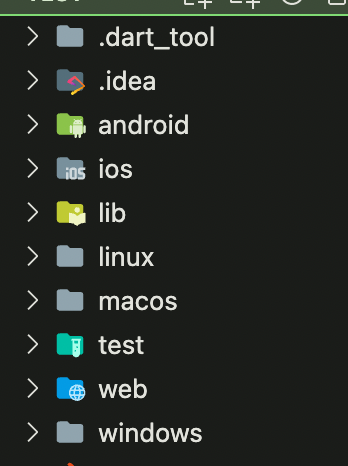 Create a new file at `ios/ci_scripts/ci_post_install.sh` and update it with the following: ``` #!/bin/sh # Install CocoaPods using Homebrew. brew install cocoapods # Install Flutter brew install --cask flutter # Run Flutter doctor flutter doctor # Get packages flutter packages get # Update generated files flutter pub run build_runner build # Build ios app flutter build ios --no-codesign ``` This is a file Xcode Cloud needs to run after the project is downloaded. We need to install [cocoapods](https://cocoapods.org/) for any plugins we are using and Flutter to prebuild our application. Then run the following command which will make the script executable: ``` chmod +x ios/ci_scripts/ci_post_clone.sh ``` ## Step 3 Open up the iOS project in Xcode by right clicking on the iOS folder and selecting "Open in Xcode". 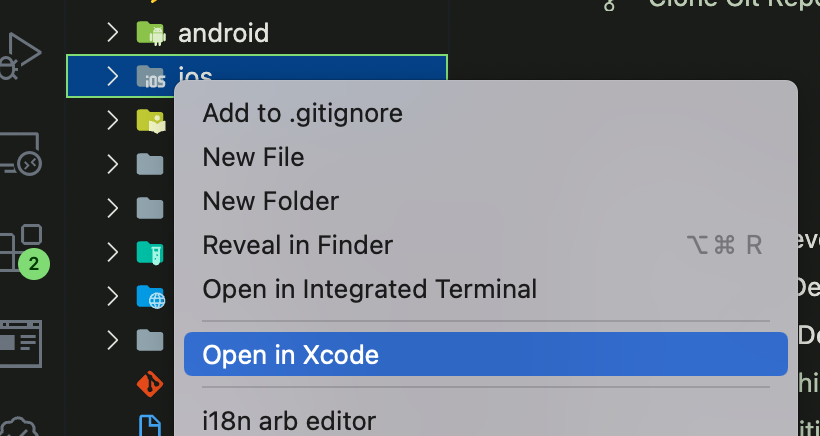 You can also open the project by double clicking on the `ios/Runner.xcworkspace` file. 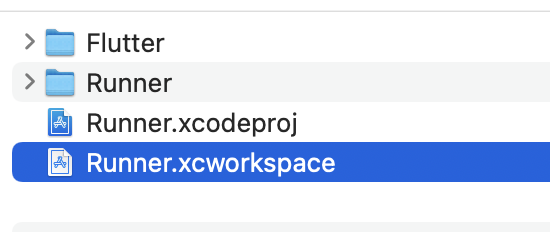 Make sure you have the latest version of Xcode Cloud install and that you have [access to the beta](https://developer.apple.com/xcode-cloud/beta/). Create a new workflow by the menu `Product > Xcode Cloud > Create Workflow`: 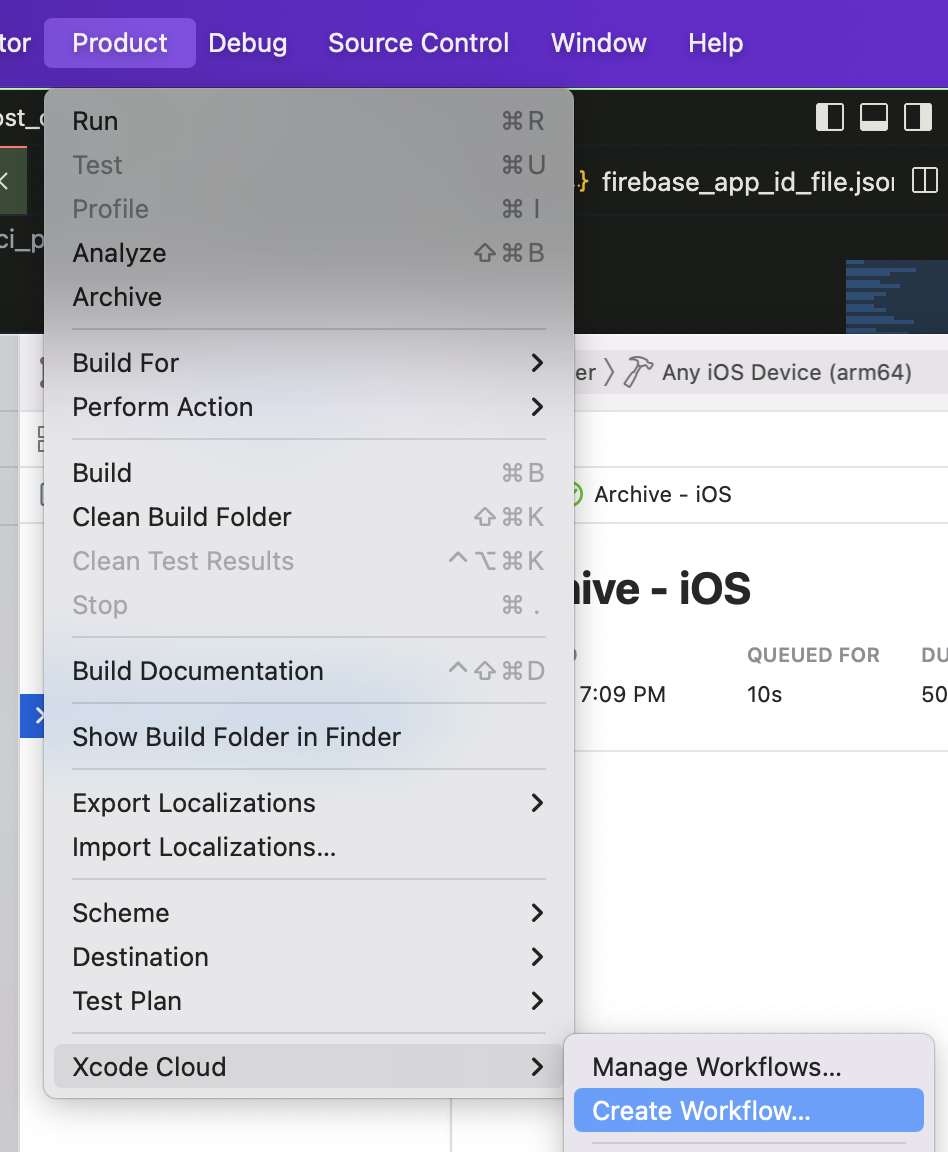 Follow the flow to add the project and choose which type of build you want. Make sure to remove MacOS as a target in the workflow by selecting `Archive - MacOS` and the delete icon on the top right. If you want to build and release the MacOS app you will need to do that with another script in the macos folder and a workflow in that Xcode workspace. You can create the file `macos/ci_scripts/ci_post_clone.sh` and update it with the following: ``` #!/bin/sh # Install CocoaPods using Homebrew. brew install cocoapods # Install Flutter brew install --cask flutter # Run Flutter doctor flutter doctor # Enable macos flutter config --enable-macos-desktop # Get packages flutter packages get # Update generated files flutter pub run build_runner build # Build ios app flutter build ios --no-codesign ``` If all goes well it will look like the following after a successful build: 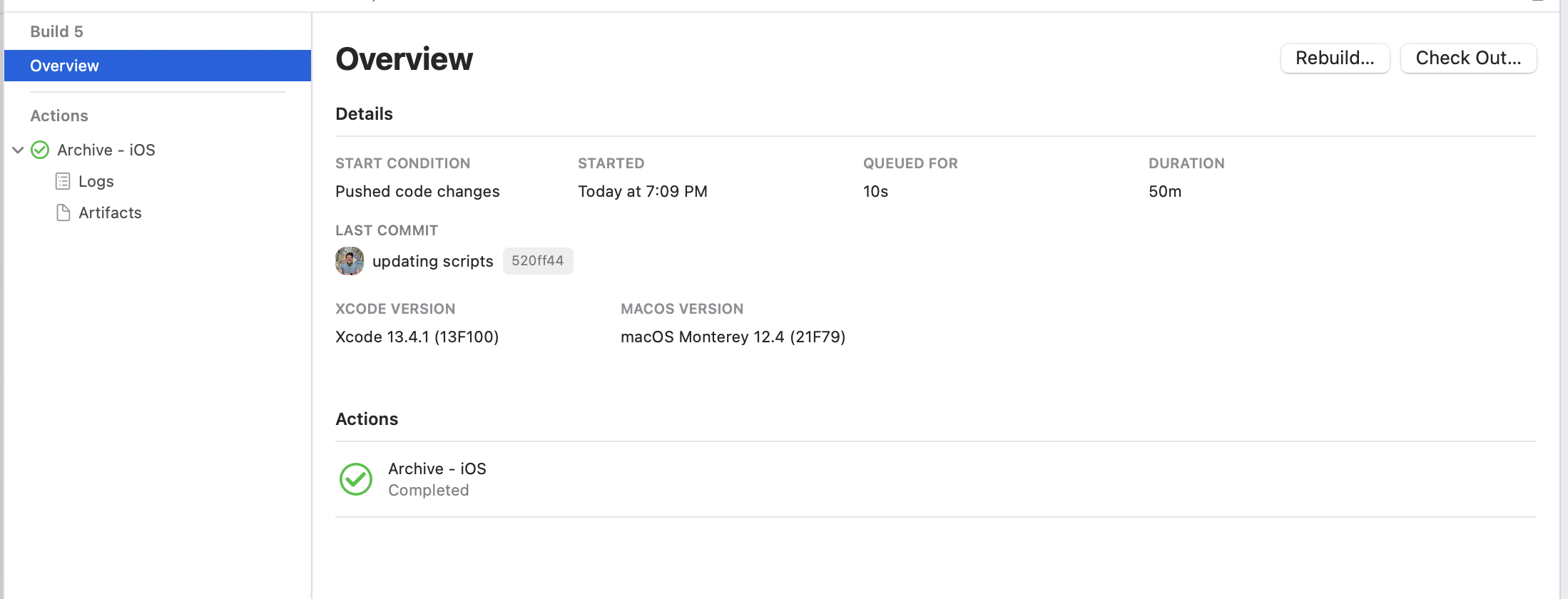 ## Conclusion Flutter makes it ease to build and deploy to multiple platforms and Xcode Cloud takes care of the signing for Apple platforms. You can learn more about cd and flutter [here](https://docs.flutter.dev/deployment/cd).
Related in Cloud & DevOps
appbuilder-action-scaffolder
IncludedCreate, implement, deploy, and debug Adobe Runtime actions with consistent layout, validation, and error handling. Use this skill whenever the user needs to add actions to an App Builder project, understand action structure (params, response format, web/raw actions), configure actions in the manifest, use App Builder SDKs (State, Files, Events, database), deploy and invoke actions via CLI, debug action issues, or implement patterns such as webhook receivers, custom event providers, journaling consumers, large payload redirects, action sequence pipelines, and Asset Compute workers. Also trigger when users mention serverless functions in Adobe context, action logging, IMS authentication for actions, or cron-style scheduled actions.
orchestrating-datacloud
IncludedSalesforce Data Cloud product orchestrator for connect→prepare→harmonize→segment→act workflows. Use this skill when the user needs a multi-step Data Cloud pipeline, cross-phase troubleshooting, or data space and data kit management. TRIGGER when: user needs a multi-step Data Cloud pipeline, asks to set up or troubleshoot Data Cloud across phases, manages data spaces or data kits, or wants a cross-phase sf data360 workflow. DO NOT TRIGGER when: work is isolated to a single phase (use the matching phase-specific skill), the task is STDM/session tracing/parquet telemetry (use observing-agentforce), standard CRM SOQL (use querying-soql), or Apex implementation (use generating-apex).
github-project-automation
IncludedAutomate GitHub repository setup with CI/CD workflows, issue templates, Dependabot, and CodeQL security scanning. Includes 12 production-tested workflows and prevents 18 errors: YAML syntax, action pinning, and configuration. Use when: setting up GitHub Actions CI/CD, creating issue/PR templates, enabling Dependabot or CodeQL scanning, deploying to Cloudflare Workers, implementing matrix testing, or troubleshooting YAML indentation, action version pinning, secrets syntax, runner versions, or CodeQL configuration. Keywords: github actions, github workflow, ci/cd, issue templates, pull request templates, dependabot, codeql, security scanning, yaml syntax, github automation, repository setup, workflow templates, github actions matrix, secrets management, branch protection, codeowners, github projects, continuous integration, continuous deployment, workflow syntax error, action version pinning, runner version, github context, yaml indentation error
sf-datacloud
IncludedSalesforce Data Cloud product orchestrator for connect→prepare→harmonize→segment→act workflows. TRIGGER when: user needs a multi-step Data Cloud pipeline, asks to set up or troubleshoot Data Cloud across phases, manages data spaces or data kits, or wants a cross-phase `sf data360` workflow. DO NOT TRIGGER when: work is isolated to a single phase (use the matching sf-datacloud-* skill), the task is STDM/session tracing/parquet telemetry (use sf-ai-agentforce-observability), standard CRM SOQL (use sf-soql), or Apex implementation (use sf-apex).
fabric-cli
IncludedUse this skill for Fabric.so CLI workflows with the `fabric` terminal command: diagnose/install/login, search or browse a Fabric library, save notes/links/files, create folders, ask the Fabric AI assistant, manage tasks/workspaces, generate shell completion, check subscription usage, produce JSON output, and use Fabric as persistent agent memory. Do not use for Microsoft Fabric/Azure/Power BI `fab`, Daniel Miessler's Fabric framework, Python Fabric SSH, Fabric.js, or textile/fashion fabric.
lark
IncludedLark/Feishu CLI skills: lark-cli operations for docs, markdown, sheets, base, calendar, im, mail, task, okr, drive, wiki, slides, whiteboard, apps, approval, attendance, contact, vc, minutes, event. Use when the user needs to operate Lark/Feishu resources via lark-cli, send messages, manage documents, spreadsheets, calendars, tasks, OKRs, deploy web pages, or any Feishu/Lark workspace operations.